01 / In the liquid
Small building blocks.
Already free.
Nutrakos contains six free amino acids in a liquid sachet. “Free” means the amino acids are not joined together in protein or peptide chains.

The studies, the measurements and the six-amino-acid formula. Explore what was observed, and what each result can tell us.
Nutrakos contains six free amino acids in a liquid sachet. “Free” means the amino acids are not joined together in protein or peptide chains.
Dietary proteins and longer peptides are broken down during digestion. Free amino acids do not need peptide bonds to be split before absorption.
Folds and microscopic projections give the small intestine a large absorptive surface. Transport proteins help amino acids and small peptides cross the intestinal lining.
After absorption, amino acids join the body’s wider nutrient pool. The body uses them in many processes, including making proteins.
Scroll to explore, or choose a chapter below.Scroll through the four stages, or tap to jump.
12 women aged 39–62 took two sachets daily. Instrumental measurements assessed hydration and plastoelasticity at different depths.
Read the pilot study ↗21 women completed a manufacturer-funded study. Two sachets daily for two weeks, then one daily. No placebo group was included.
Read the human study ↗A defined six-amino-acid mixture was studied in cultured human fibroblasts. Laboratory findings explore mechanisms; they are not a clinical outcome in people.
Read the cell study ↗Instrumental measurements recorded changes in skin hydration, the periocular area and skin thickness over 12 weeks.
| Measurement | Day 28 | Day 84 |
|---|---|---|
| Superficial skin hydration | +6.0% | +9.2% |
| Deep skin hydration | +4.2% | +7.6% |
| Wrinkle depth | −9.5% | −14.5% |
| Skin roughness (Sa) | −4.9% | −7.7% |
| Skin thickness | +0.11 mm | +0.24 mm |
| Distensibility (R0) | −11.5% | −19.3% |
| Overall elasticity (R2) | +7.8% | +11.9% |
Figures are changes from the study baseline, not differences against a placebo. Lower wrinkle depth and roughness indicate a smoother measured surface. R0 measures distensibility; R2 measures overall elasticity.
The study was open-label, small and manufacturer-funded. Individual outcomes vary. These findings should not be presented as guaranteed results or proof of superiority over collagen supplements.
The average fell from 12.8 at baseline to 6.3 at day 84. The reduction is rounded to 51%; it is not a claim of 51% more hair.
The proportion of hairs in the resting phase declined by about 9.5 percentage points. This is a change in hair-cycle distribution, not a 9.5% relative reduction in total hair density.
Clinicians recorded improvement in hardness, smoothness and evenness in 62% of participants, and nail hydration in 67%. Changes were mainly mild to moderate.
Self-assessments are distinct from measurements: 66.7% reported stronger nails and 71.4% reported less brittleness. Read the full study and methods ↗
Volar forearm, 0.5 mm measurement depth, after 30 days. Deep hydration at 1.5 mm increased by 6.5%.
Dorsal forearm at 1 mm, after 30 days. The 3 mm measurement increased by 19.2%.
Ages 39–62. Two sachets daily. A small open pilot without a placebo group, with assessments at baseline, two weeks and one month.
The six-amino-acid mixture was investigated for its effect on extracellular-matrix gene expression in cultured human fibroblasts. The study examined collagen and elastin pathways, and compared amino-acid mixtures with other preparations.
Observed in the laboratory with a 1% six-amino-acid mixture at 72 hours. This is a cell-study result, not a 124% increase in human skin elastin.
Glycine, L-alanine, L-proline, L-valine, L-leucine and L-lysine hydrochloride. The studied ratio is shown with its source on the Nutrakos page.
See the studied ratio ↗Read the granted patent documents for the scope of the claimed inventions. A patent is not a guarantee of clinical benefit.
US 10,272,059 B2 ↗Explore the individual molecular structures in the six-amino-acid blend. Choose a name to see its atoms and bonds, with slow rotation to reveal the shape.
These models explain molecular structure. The research above explores the formula as a combination.
Full ingredients & nutrition ↗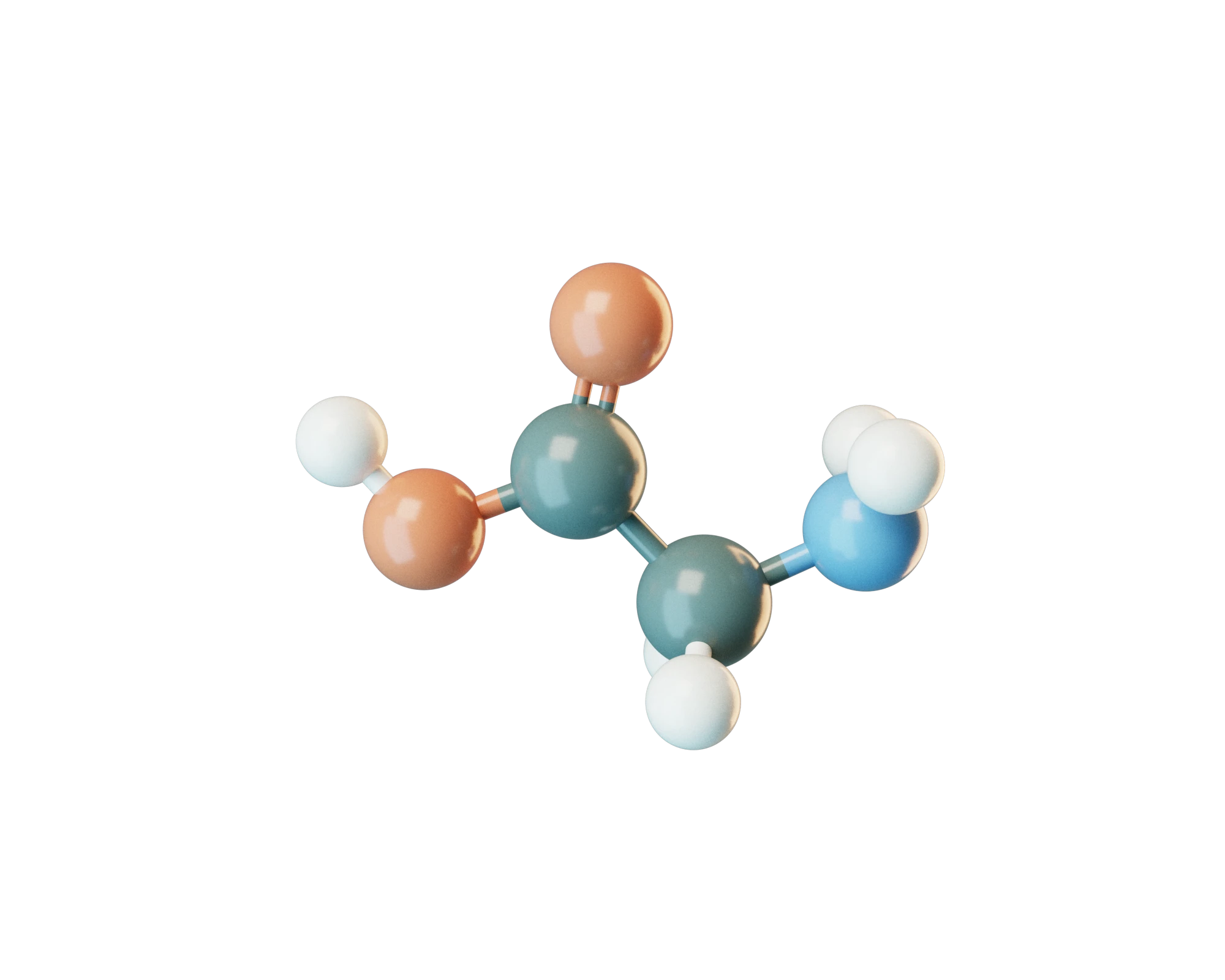
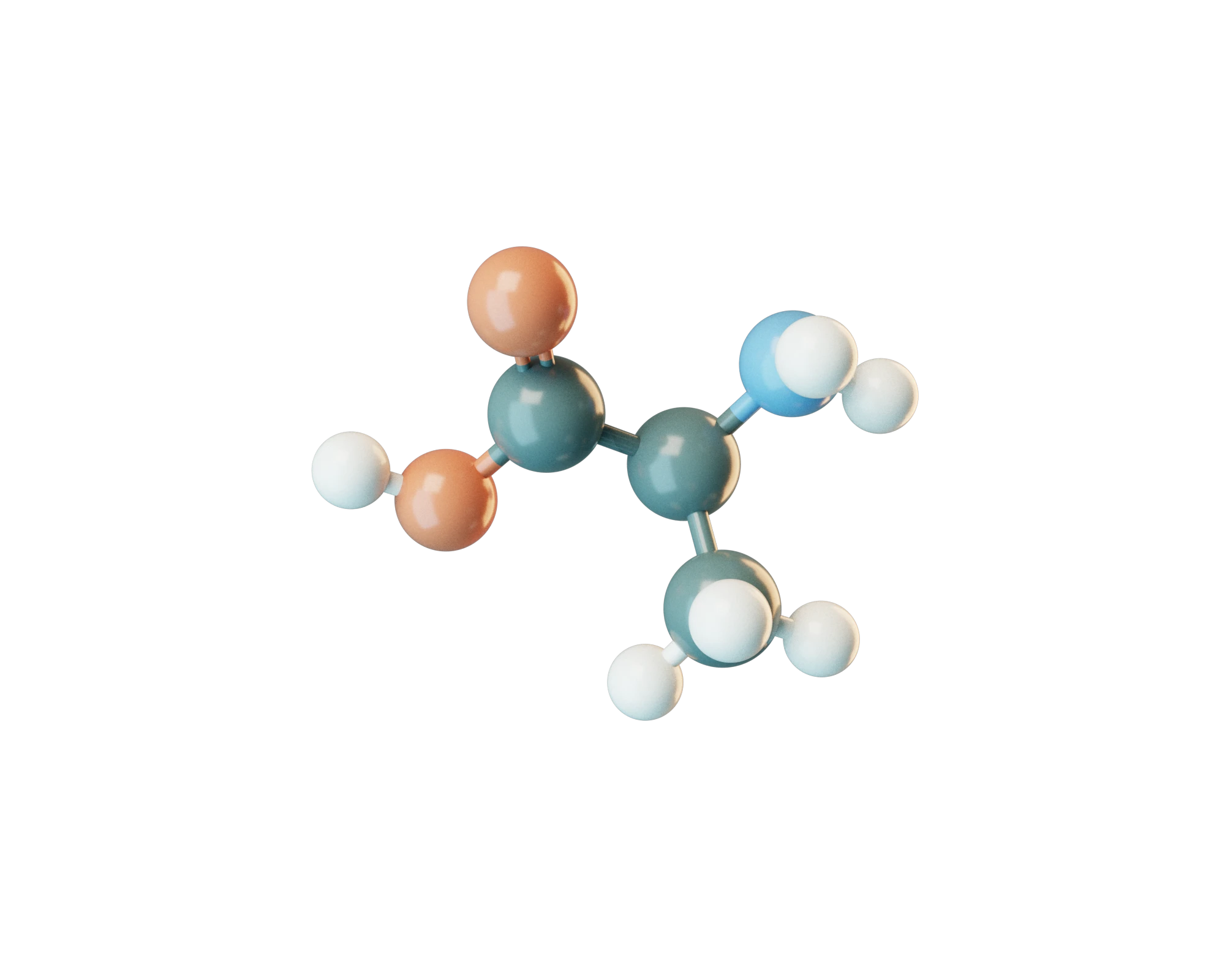
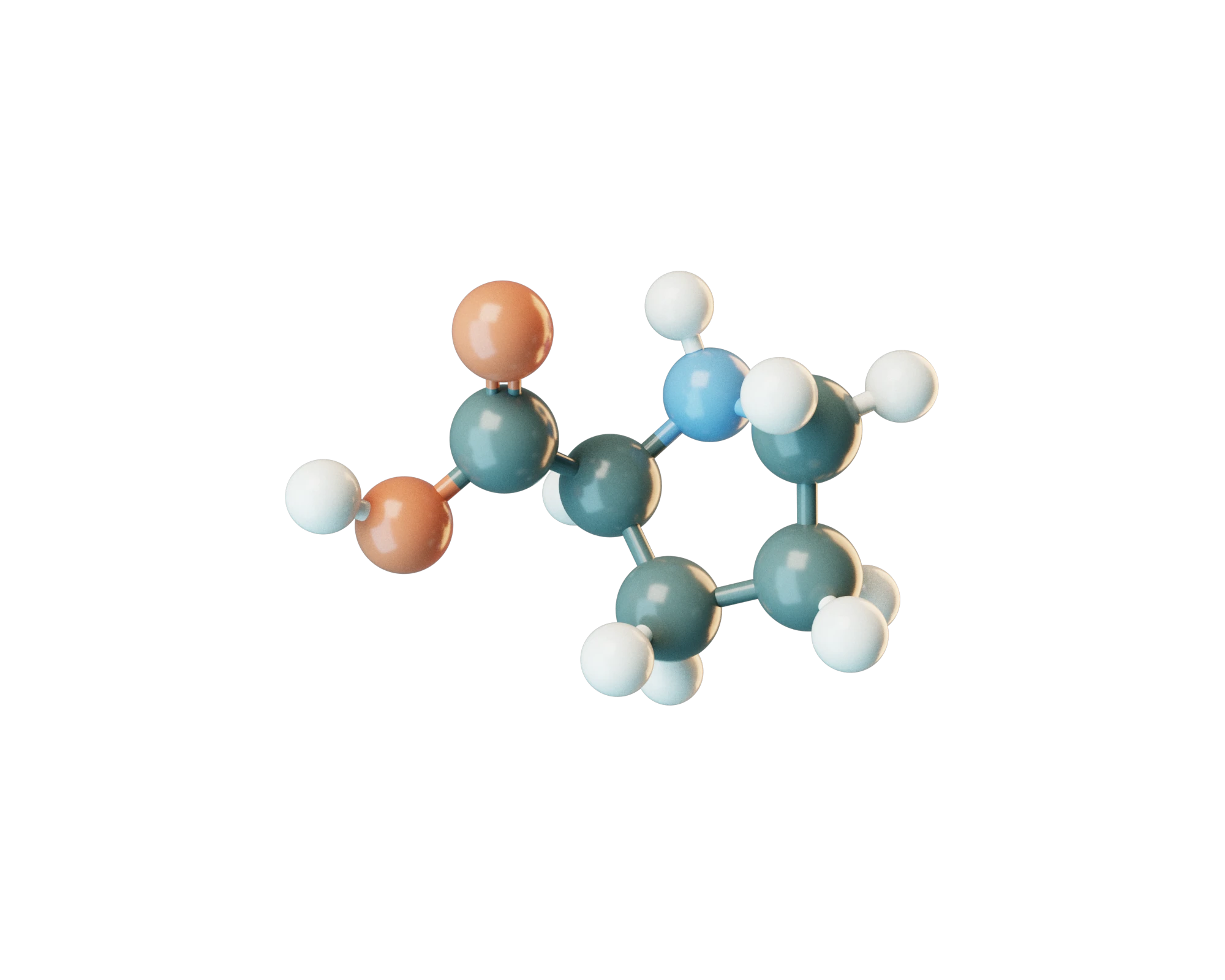
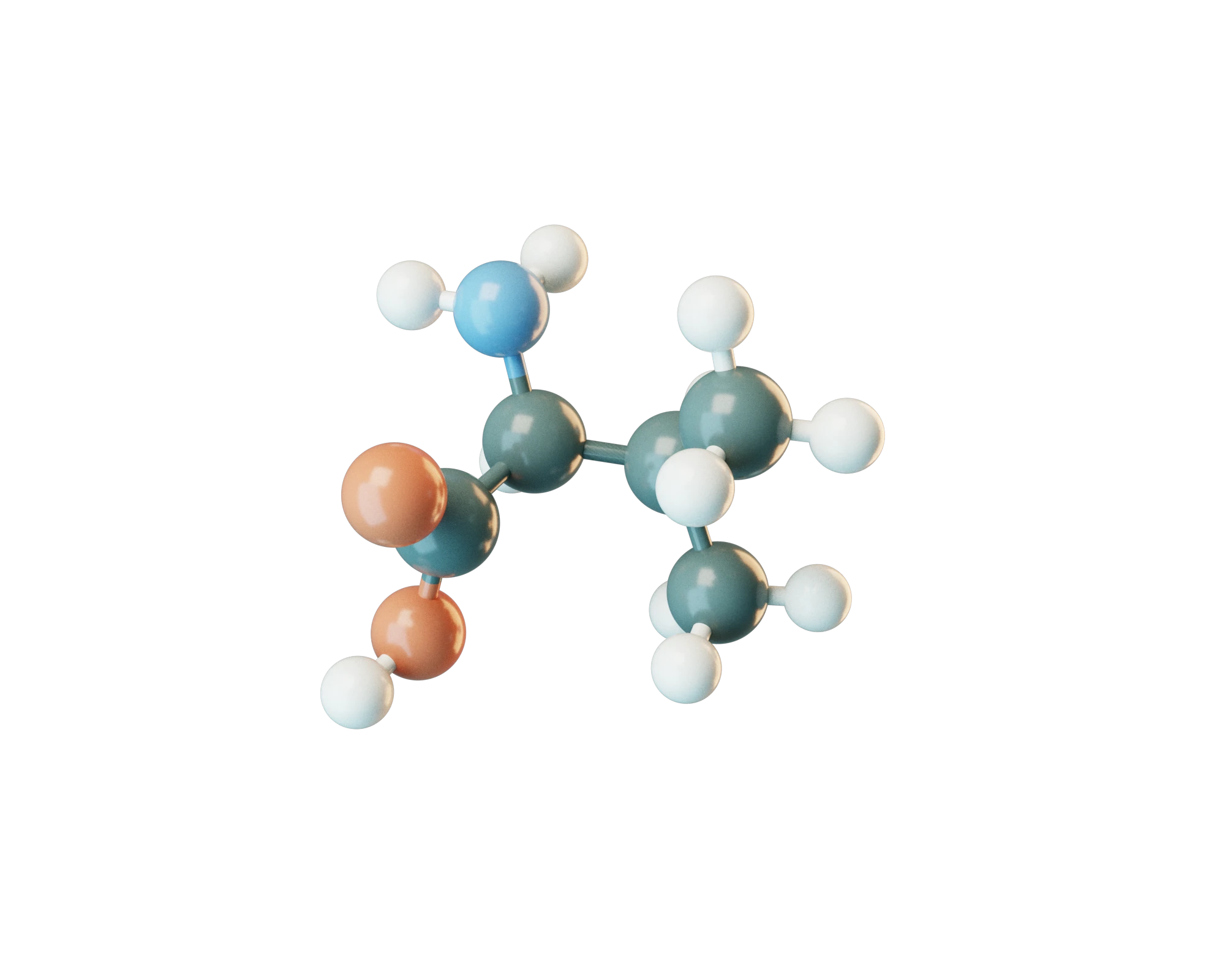
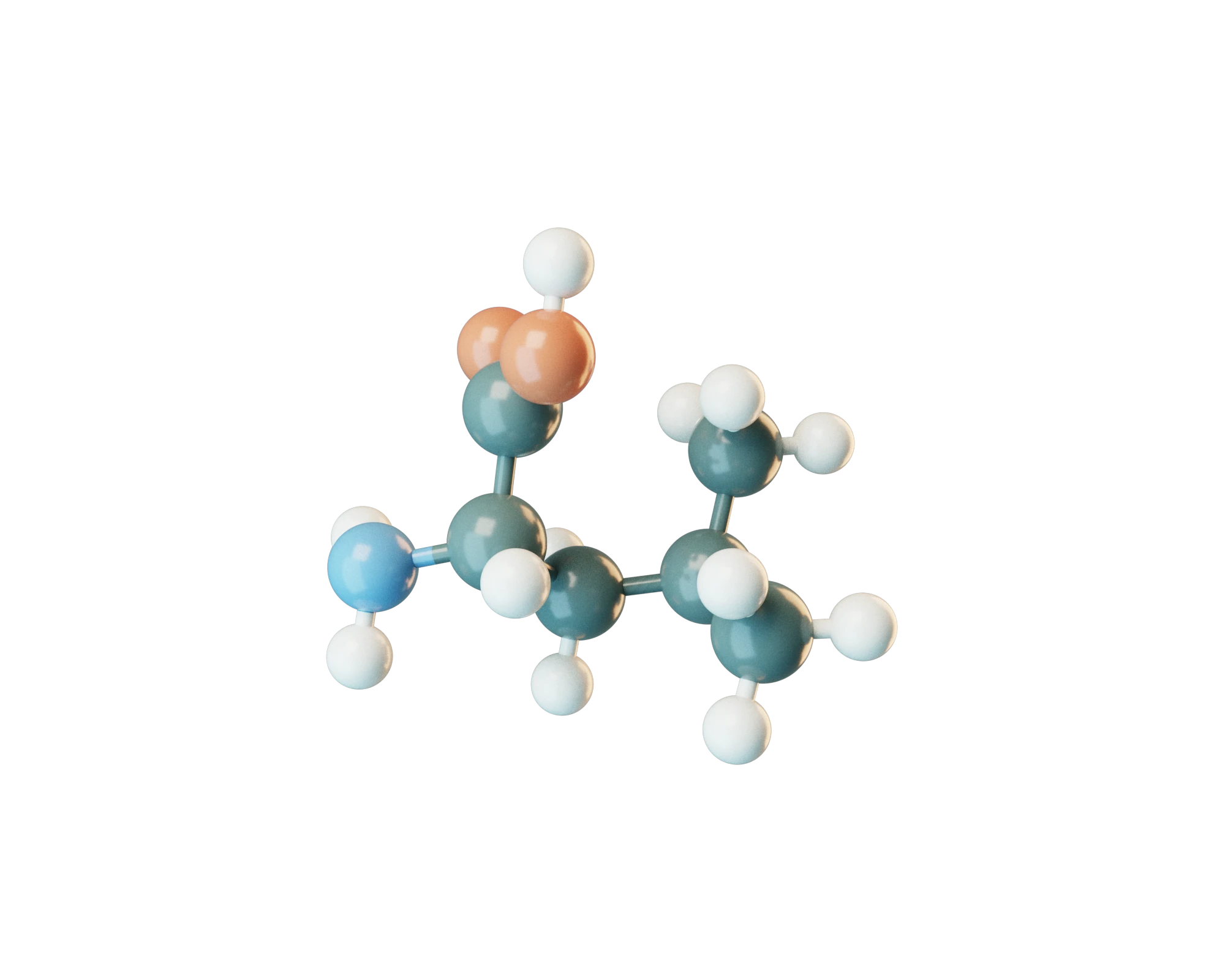

Neutral molecular models; one possible 3D conformation. Colours and atom sizes are illustrative.
Nutrakos supplies lysine as L-lysine hydrochloride.
View molecular structure ↗A Dalton measures molecular mass. Glycine is approximately 75 Da; the free amino acids in this blend are roughly 75–150 Da. Collagen peptides are linked amino-acid chains with a range of molecular sizes. Their size varies by preparation.
The distinction is free amino acids versus linked peptides. Molecular size alone does not establish clinical superiority, 100% absorption, a fixed arrival time in blood, or delivery specifically to skin.
These papers concern protein metabolism and amino-acid biology in other contexts. They are background reading, not direct clinical proof for Nutrakos.
Can’t live without this products! Amazing results works so effectively.. would highly recommend.
Very easy to buy and so pleased Dr Abs shared your site on utube
Great product! Looking forward to seeing results, I’m beginning week two.
I’m very selective about supplements, I prefer drinkables to tablets. Taking this product has definitely helped me. My nails were somewhat brittle and ridged before, they feel stronger and smoother now. As for my hair, my 10-year-old noticed before I did. She said: “Daddy, why are your eyebrows looking so thick?”
I’ve started my first batch of Nutrakos and I’m really impressed so far. It’s easy to take, and I feel good having it as part of my daily routine. I’ll definitely keep using it.
I am excited to begin my Nutrakos journey, though I have only just begun within less than a week ago, thus far I’m impressed with the service to Western Canada, and I have not changed anything else in my supplement nor diet routine, both of which are strictly adhere to, but I can notice already a slight difference in tiny fine lines under my eyes. It is not just me convincing myself that I have, I am quite an analytical of myself, but completely unprompted. I have received two separate compliments and asking me what I’m doing. I should add, then I suffer from extreme digestive issues, stemming from a weak liver from birth, and of course, like any illness, this is often reflected in my complexion. I must say, I am feeling exceptionally excited about continuing taking this supplement.
I love and appreciate everything about this product and company
Well achieved and operating in integrity and quality
I absolutely love this product! I feel like I’m giving the best to my body. Taking care of my skin & hair from the inside out!
Absolutely love this product, just turned 50 and with consistent daily use, my skin is smoother and radiant, my hair feels thickest it has ever been. I’m loving the results.
Awesome product I’m hooked!
Great
Been using NutraKos for several months now. I have loved the results of stronger nails, healthier hair, and muscle tone. I think this is one of the best amino protein products on the market.
Great product!
Used Nutrakos for a few months now. My skin looks smoother and my hair is thicker. Very satisfied!
Taste is very acceptable
An easy add in with my morning mix
Waiting for a few months use to judge affect
But already has very good endorsements
